
Blog
Ashwagandha: Benefits, Dosage and Side Effects

Written by the Siddhi Ayurvedic Team · Reviewed by a qualified Vaidya with a degree in Ayurveda · Last updated October 3, 2026
Known as one of the most important herbs in Ayurveda, Ashwagandha (Withania somnifera) is an adaptogen that has been used for over 3,000 years to support stress relief, energy and concentration.
Key Benefits
- Stress support: Traditionally used to help the body adapt to stress and promote a sense of calm.
- Better sleep: Often taken at night to support restful sleep.
- Strength and stamina: Supports muscle strength and recovery when combined with regular exercise.
Dosage Guidelines
Ashwagandha root extract is commonly taken in the range of 300–500 mg per day, but the right dose depends on the product and the person. Follow the dose on the pack or your practitioner’s advice. It can be taken with warm water or milk, at night to support sleep or in the morning for daily stress.
Side Effects and Precautions
Ashwagandha is generally well tolerated. Taking too much can cause mild stomach upset or loose motions. Avoid it during pregnancy, and consult a doctor first if you have thyroid problems, an autoimmune condition (such as lupus or rheumatoid arthritis), or take sedatives, thyroid or blood-pressure medicines.
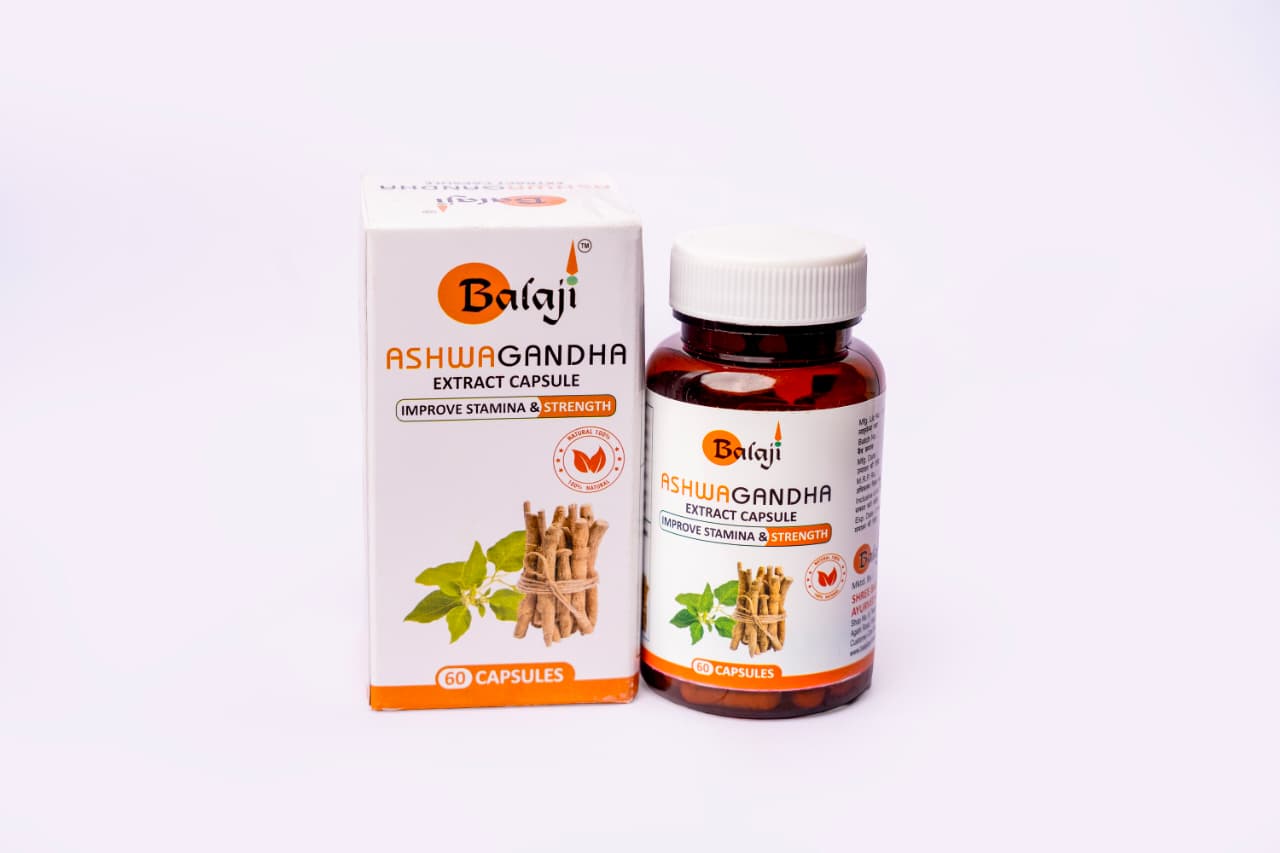
Recommended product: Ashwagandha Capsule
Balaji Ashwagandha Capsules contain standardised root extract in a convenient capsule, a simple way to add this classic Ayurvedic herb to your daily routine for stress support and natural energy.
This article is for general information and is based on traditional Ayurvedic knowledge. It is not medical advice and does not replace consultation with a qualified doctor or Ayurvedic practitioner. Ayurvedic products are not intended to diagnose, treat, cure or prevent any disease. If you are pregnant, breastfeeding, have a medical condition or take regular medication, consult your doctor before using any supplement.
